In the News

Legislation to streamline homeless housing development is making its way through the state Senate.

State Sen. Josh Becker has introduced Senate Bill 1395 to speed up the time it takes to build temporary housing in California. Becker is gathering support for his proposed legislation and came to San Jose on Monday to share his vision alongside Mayor Matt Mahan — calling the South Bay city the poster child of interim housing success.


Interim projects could get boost with Becker legislation

A safe bed, with a door that locks, can be life-changing for thousands of the Bay Area’s houseless residents. Providing basic needs like security and running water, interim housing projects may be getting a boost from lawmakers this year, while politicians and developers wrangle over affordable and permanent solutions.


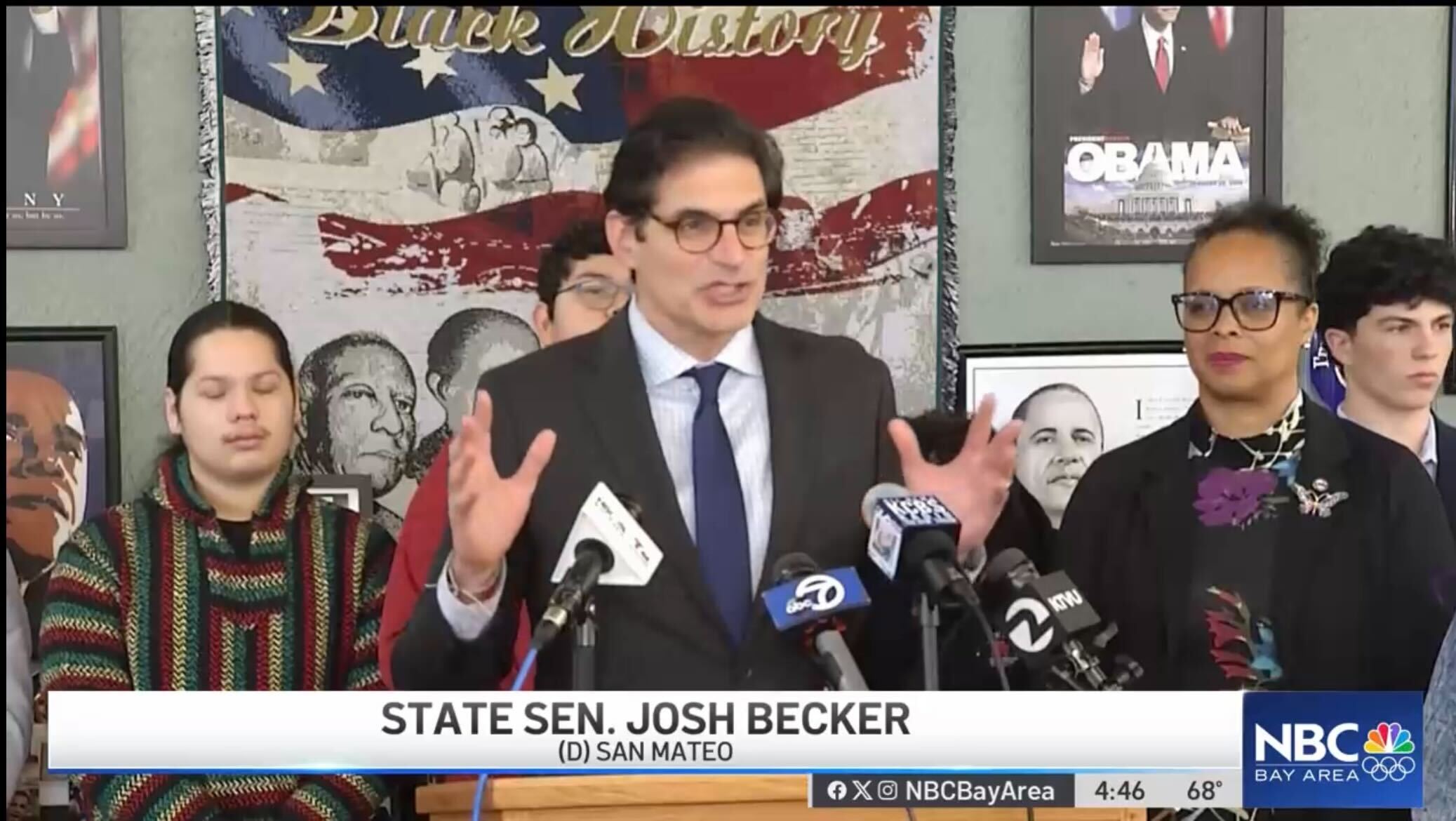
California State Sen. Josh Becker of District 13 spoke at a press conference at the Domini Hoskins Black History Museum & Learning Center. Becker’s messages during the conference took place after his recent investment in the Domini Hoskins Museum with the help of California Gov. Gavin Newsom. 


“There is reason for serious concern about how AI could be used to mislead voters in campaigns,” said Josh Becker, a Democratic state senator in California, in an interview. “It’s encouraging to see some companies coming to the table but right now I don’t see enough specifics, so we will likely need legislation that sets clear standards.”

Click here to read more.


New California bill aims to implement AI transparency.

California State Senator Josh Becker introduces legislation that will require AI providers to watermark their images, videos and audio.

Click here to watch. 


California lawmakers are drawing up multiple plans to require watermarks on content created by artificial intelligence to curb the abuses within the emerging technology, which has affected sectors from political races to the stock market.

At least five lawmakers have promised or are considering different proposals that would require AI companies to implement some type of verification that a video, photo, or written work was made by the technology. The activity comes as advanced AI has rapidly evolved to create realistic images or audio on an unprecedented level.